
Author: kristakoval2015
New Techniques – Structural Myofascial Therapy
I had the great pleasure to take Montreal-based therapist, BetsyAnn Baron’s Structural Myofascial Therapy (SMFT) course in May and have been employing it with clients with great success and positive results.
SMFT looks at the body’s connectivity as a whole and addresses aches, pains, dysfunctions and postural limitation holistically because the location of your pain may not be the source. (“The victim sp eaks outlouder than the perpetrator” concept).
SMFT is a deep and slow manual technique that opens the dialogue with stiff and painful areas and areas of reducing mobility to:
- rehabilitate, better adapt and increase body potential;
- create a better ‘organized’ body;
- increase balance and alignment;
- increase respiratory capacity and body support;
- encourage more efficient energy use; and
- discover a new dynamic posture that can be maintained without effort or pain.
Call 360 Degrees Health Centre at 830.6600 to book your appt, or online at http://www.360healthcentre.ca
Sleep tight
Do you have difficulty falling asleep, and / or staying asleep? Perhaps you have insomnia. 30% of American adults have occasional bouts of insomnia, and 10% have chronic insomnia (lasting more than 6 months). Incomplete sleep causes concentration problems, irritability and potential health risks. A healthcare professional or sleep expert should be consulted for thorough diagnosis, however, massage therapy can also help with reducing stress levels and increasing serotonin levels.
A study on back pain, published in the International Journal of Neuroscience, demonstrated that in addition to a decrease in long-term pain, subjects receiving massage experienced improved sleep and an increase in serotonin levels. Results were based on twice-weekly, 30-minute massages for 5 weeks.
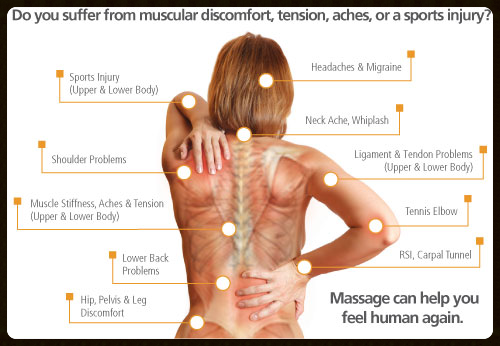
Massage benefits
New techniques- Cupping
I had the opportunity recently to take a soft silicone Cupping Course (Tissue Distraction Release with Movement) and have been employing it with successful reviews from clients. The soft silicone contours with your body and is meant to be moved across the skin, not left stationary (as the hard plastic cup style does).
It is effective for :
- any area that soft tissue massage and release is indicated;
- treating musculoskeletal aches and pains by creating a negative pressure in the cup on your skin (pulling the tissues up rather than pushing down on them);
- releasing the interfaces between the skin, myofascia, neural tissue, muscles, ligaments and tendons;
- increasing circulation;
- increasing lymphatic flow (reducing inflammation /congestion);
- releasing scar tissues; and
- relaxing muscles and myofascial trigger points.
great massages

Moncton Duathlon
A big shout out to all those participating today in the Moncton Duathlon presented by the Southeast Storm Triathlon Club! Click HERE for event details and race route so you can come watch and cheer! and also the Ottawa 1/2 and full marathons!!
Cold vs. Heat
Are you confused as to when to apply heat or ice / cold? Knowing which one to use properly can speed up your recovery process, while choosing the wrong one can delay it. Choosing between the two often comes down to what stage of healing you are in: Acute or Chronic.
Acute injuries are sudden, sharp, traumatic injuries that occur immediately (or within hours) and cause pain (possibly severe pain). Most often acute injuries result from some sort of impact or trauma such as a fall, sprain, or collision and it’s pretty obvious what caused the injury. Common signs of an acute injury are: pain, tenderness, redness, skin that is warm to the touch, swelling and inflammation. If you have swelling, you have an acute injury.
Cold therapy with ice is the best immediate treatment for acute injuries because it reduces swelling and pain. Ice is a vaso-constrictor (it causes the blood vessels to narrow) and it limits internal bleeding at the injury site. Apply ice (wrapped in a thin towel for comfort) to the affected area for 10 to 15 minutes at a time, using the CBAN rule. CBAN stands for Cold, Burning, Aching and Numbness. It is ok to feel the C, B and A – but always remove the cold therapy if you experience Numbness, even if this occurs prior to 10-15 minutes! Numbness implies tissue damage such as frost nip. Allow the skin temperature to return to normal before icing a second or third time. You can ice an acute injury several times a day for up to three days.
After a workout, ice is the better choice on a chronic injury.
Cold precautions:
- with insensitive skin or in the presence of poor circulation
- elderly people, young children, and people with diabetes must be very careful with cold treatments
- on the left shoulder if you have a heart condition
- around the front or side of the neck
If you have any questions about cold therapy, ask your health care practitioner for advice.
Chronic injuries develop slowly and is persistent and long-lasting.
Heat treatment (or thermotherapy) relieves stiffness and chronic aches, facilitates relaxation, and stimulates circulation. It works by increasing tissue temperatures and blood flow, thereby drawing extra nutrients into the area to assist in the recovery and healing process.
Heat treatments should be used for chronic injuries or injuries that have no inflammation or swelling. Heat applied to chronic conditions helps relax and loosen tissues, and to stimulated blood flow to the area. Chronic injuries can be subtle and slow to develop. They sometimes come and go, and may cause dull pain or soreness. They are often the result of overuse, but sometimes develop when an acute injury is not properly treated and doesn’t heal.
Safely apply heat to an injury 15 to 20 minutes at a time and use enough layers between your skin and the heating source to prevent burns. Check skin frequently for redness.
When to use:
- sore, stiff, nagging muscle or joint pain
- with chronic pain or overuse injuries before exercise to increase the elasticity of joint connective tissues and to stimulate blood flow
- relax tight muscles or muscle spasms
Heat precautions:
- do not apply heat after exercise
- do not apply on an acute injury
- do not use heat over swollen tissues or redness
- do not use heat before vigorous exercise – muscles may be too relaxed for peak performance and safety
be awesome!
Naturopathic Medicine Week!
This week is National Naturopathic medicine week. Call 830.6600 to book with 360 Degrees Health Centre’s Naturopathic Doctor Blossom!
“Naturopathic medicine is a distinct primary health care system that blends modern scientific knowledge with traditional and natural forms of medicine. The naturopathic philosophy is to stimulate the healing power of the body and treat the underlying cause of disease. Symptoms of disease are seen as warning signals of improper functioning of the body, and unfavourable lifestyle habits. Naturopathic Medicine emphasizes disease as a process rather than as an entity.
Treating both acute and chronic conditions, naturopathic treatments are chosen based on the individual patient – their physiological, structural, psychological, social, spiritual, environment and lifestyle factors. In addition to diet and lifestyle changes, natural therapies including botanical medicine, clinical nutrition, hydrotherapy, homeopathy, naturopathic manipulation and traditional Chinese medicine/acupuncture, may also be used during treatments.”
 kkrmt.com